
The Millennial’s Quest

The quest of one mug to find deeper meaning in a meaningless world.
Why do hide behind consumerism? How does attaching our very self-value to brands and products define who are? Why can’t an object just add value to what already exists?
We claim to know who we are. We say we are in touch with ourselves. Then why do we look? Why do we yearn? Are we just adding metadata tags for our digital overlords instead of experientially discovering our pre-existing unformed potential selves?
Fear. You know that’s what drives us. Our social media is full of our smiling faces, expensive food, duck lips, and vacations. But every day we go to work to slave way for a system that sees us as nothing more than profit margins. Always the threat of dismissal and destitution looms.
And how do we spend our money? Meaningless products that last five years! Chasing after the newest, the thinnest, the highest number of Gs. Does television get better? Are the jokes funnier? Or is the television just slightly higher resolution? And then one day we wake up and realize that we are wallowing cold and frozen in a destitute wasteland of electronics that children in the Congo died to produce.
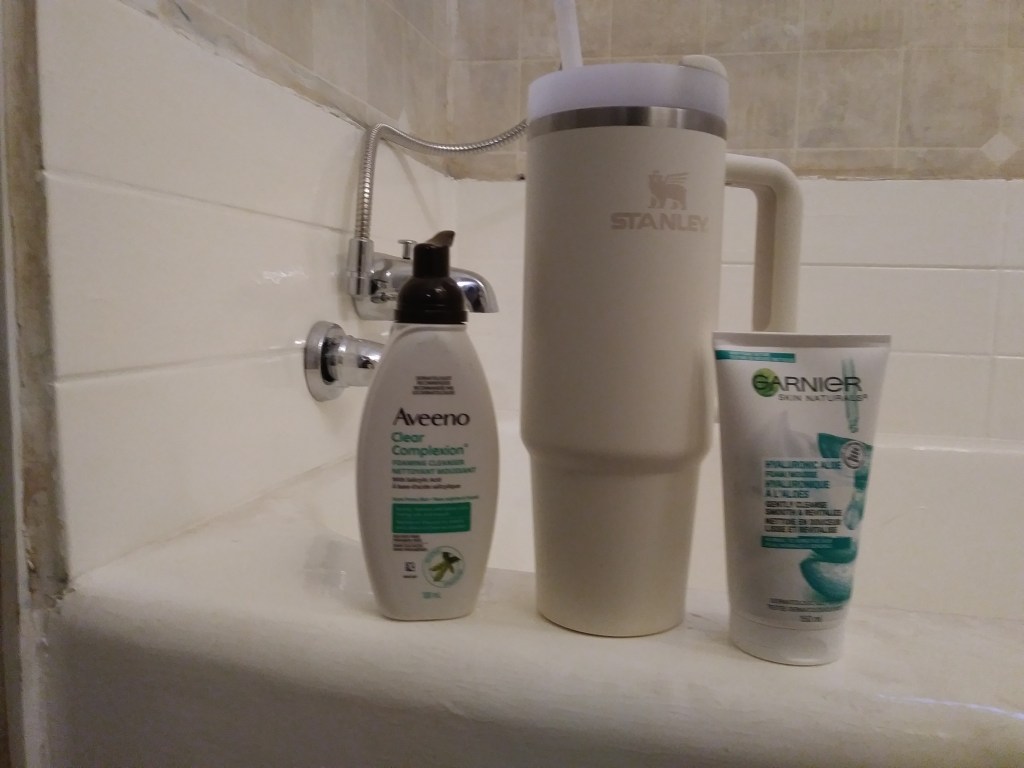
If we are to face the world, we need a face the world is worthy of. But oh poop is this stuff expensive. Maybe I’ll just use filters and work remotely.

When will we ever be comfortable? Is life forever a balancing act, where we try to advance without falling back?

We have friends, yes. But are friends anymore? If you don’t have them on at least three social media accounts profile friend/subscriber lists, do they really care about you? And what if you have thousands of likes? Do they like you, or do they like the internet version of you? If you robbed a bank, would they want a cut of the earnings but then not drive the getaway car?

What is security? Our world is ever changing, and our reputations matter more than ever. What we build for years can be cancelled in minutes. And yet, the physical world which sustains our body and homes is so old that we cannot fathom how unchanged it is. It simply exists, from time immemorial. How do we reconcile our obsession for change with our need for stability?

Screw life. I own a couch, Ima gonna lie down and listen to some weird genre of unknown music so I feel cooler than you. Sus.

Intro 1: My Model of a Thesis in Historical Writing

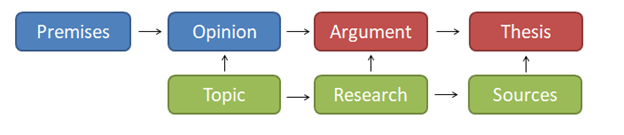
While I was a TA at Carleton University, I created a model for explaining how to develop a strong thesis statement in historical writing. I got bored over covid lockdown, so I decided to share it with the world. Political science, military studies, economics, and other similar fields often have neat, snappy and simple to explain (if hard to apply) models to help conceptualize the basic tenets of the fields, but history lacks such conciseness. There are many quality books and articles on how to write history, but they are often long and sometimes full of pontificating and excessive verbosity. I love the written word, but sometimes stressed students who value very minute need something in one simple diagram instead of in twenty dense pages.

So here is my basic model. The next bunch of posts will be me explaining it, and how to apply it to historical writing. I will point out that this is developed first and foremost for history, but it works fairly well, with minor modifications, for other fields that require you to write more than five pages. Some of my explanations of each component run rather long, but the intent is to have a model that can be grasped and applied in a relatively short amount of time.

Components of a Thesis:

History’s Relation to the Past:

Don’t be fooled by these neat arrows. Each component of both models interacts heavily with every other component in both models, and the two models rely heavily on each other. I tried to join them together into one master model and failed. They are better explained separately, but they need each other to really make sense.

How to Avoid Semi-Colons

Some writers say that the proper way to use the semi-colon is to never use it. I think that semi-colons can be used, but only if it feels right. Which is to say, almost never. A sentence that needs a semi-colon it is probably too long. If I go ahead and use a semi-colon when I have any doubt about it, I have tacitly admitted to the inability to craft a better sentence.

 Smart people have big ideas that are unable to easily fit into one sentence, which is good. We need more big ideas. But if a smart person tries to write down their idea, they often think that they have to cram into one sentence. The human mind seems to think “1 idea=1 sentence.” The genius may have taken hours or weeks to bring that idea into fruition, and then they expect the reader to instantly grasp it in one sentence. That does not work, nor is it good writing.

I prefer to introduce the large idea at the start of the paragraph so the reader knows what I think. I then use the rest of the paragraph breaking down my thoughts. I prefer that method, I think it keeps the reader engaged. Many writers prefer to start with the build-up and then drop the idea at the end, which works fine if you have a dedicated reader.

My personal policy is to not have more than 1 semi-colon every 10 pages in the final version. Many writers like to fly through the first draft and thoroughly edit the work later. If you do this, please use as many semi-colons as you want. Then, when you edit, rewrite your long sentences into smaller, awesome sentences. And for the love of all things holy, please do not go out of your way to incorporate semi-colons.