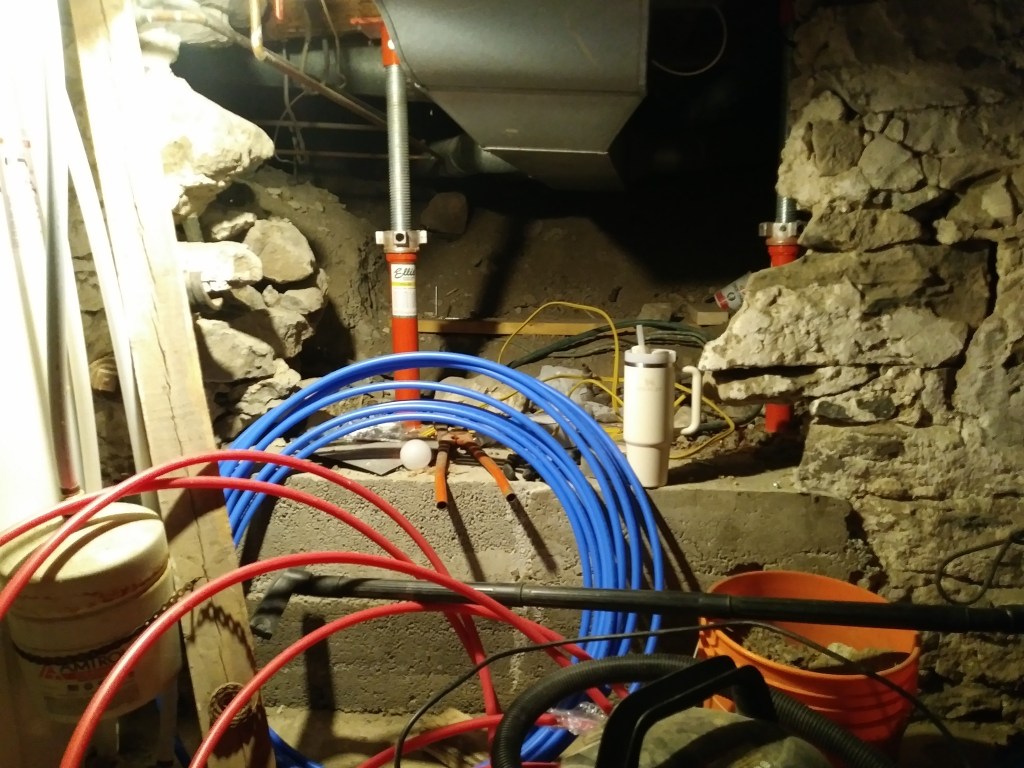
The quest of one mug to find deeper meaning in a meaningless world.
Why do hide behind consumerism? How does attaching our very self-value to brands and products define who are? Why can’t an object just add value to what already exists?
We claim to know who we are. We say we are in touch with ourselves. Then why do we look? Why do we yearn? Are we just adding metadata tags for our digital overlords instead of experientially discovering our pre-existing unformed potential selves?
Fear. You know that’s what drives us. Our social media is full of our smiling faces, expensive food, duck lips, and vacations. But every day we go to work to slave way for a system that sees us as nothing more than profit margins. Always the threat of dismissal and destitution looms.
And how do we spend our money? Meaningless products that last five years! Chasing after the newest, the thinnest, the highest number of Gs. Does television get better? Are the jokes funnier? Or is the television just slightly higher resolution? And then one day we wake up and realize that we are wallowing cold and frozen in a destitute wasteland of electronics that children in the Congo died to produce.
If we are to face the world, we need a face the world is worthy of. But oh poop is this stuff expensive. Maybe I’ll just use filters and work remotely.
When will we ever be comfortable? Is life forever a balancing act, where we try to advance without falling back?
We have friends, yes. But are friends anymore? If you don’t have them on at least three social media accounts profile friend/subscriber lists, do they really care about you? And what if you have thousands of likes? Do they like you, or do they like the internet version of you? If you robbed a bank, would they want a cut of the earnings but then not drive the getaway car?
What is security? Our world is ever changing, and our reputations matter more than ever. What we build for years can be cancelled in minutes. And yet, the physical world which sustains our body and homes is so old that we cannot fathom how unchanged it is. It simply exists, from time immemorial. How do we reconcile our obsession for change with our need for stability?
Screw life. I own a couch, Ima gonna lie down and listen to some weird genre of unknown music so I feel cooler than you. Sus.
Listen from 0:50 to 2:34, and watch the subtitles. Thomas Jefferson wrote the Declaration to be profound, and compelling when read aloud. Long ideas are broken up into shorter sentences. The most profound statements are in short sentence clauses. Some of the less important parts are in longer sentences that can be read quickly, but they build up to short parts that can be read dramatically.
You don’t have to be as good as Tommy J at dramatic writing. But there are a few things to think of.
-Every sentence should be able to be read in one breath, or have a clear break where you can pause AND it makes sense to pause.
-Important point should be in short segments that can be stressed aloud. A lot of students think long sentences are intellectual and try to put their most important ideas in long form. It’s actually the opposite when speaking.
-Use sentence length and pauses to create tone. Are you rambling on to create a thoughtful tone? Building up to a point with slightly longer sentences? Emphasizing a point with a short declaration?
-Use conversionational language to link ideas together. The reader can’t easily go back to re-read anything. “like I mentioned when discussing….” “finally, we’ll look at…”
There are at least three easy ways to get good at this. First, just look at how many syllables you have between each point of punctuation. Second, think about whether a sentence is improved by being broken up by pauses or made worse. Third, record yourself and listen for times that you sound strained, droning on, or where you think it just sounds bad.
If you wish to feel bad about yourself, record yourself reading it then ask someone who has no respect for you to comment on it.
Even if you don’t take the time to craft strong statements, you can at least create shorter sentences that sound good when spoken.
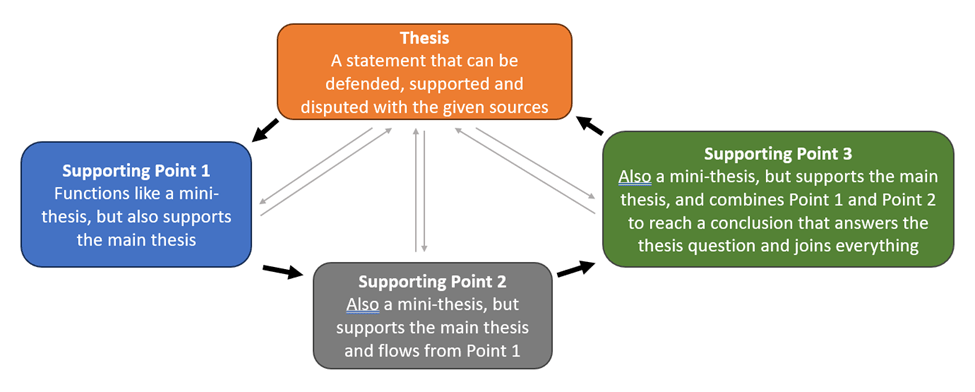
When developing the supporting points for a thesis, it’s important that they properly relate to the thesis and that they flow into each other. The relationship has to make sense, and be clearly stated and reinforced. Never trust that the reader will make the connection for themselves, and never implicitly say “trust me bro, you’ll get it soon, keep reading.”
When developing the supporting points for a thesis, it’s important that they properly relate to the thesis and that they flow into each other. The relationship has to make sense, and be clearly stated and reinforced. Never trust that the reader will make the connection for themselves, and never implicitly say “trust me bro, you’ll get it soon, keep reading.”
A thesis is a statement (i.e. something that makes a point) that is defensible, supportable, and also disputable. Each supporting point should also have those characteristics. They should each be distinct from each other, but make sense together. They should especially make sense when read with the point beside it.
If we look back at the previous example from A Handmaid’s Tale, we see that the three points meet these criteria.
Point 1: Gilead is set up for the benefit of men, and women suffer under that system. You can defend that statement. You could also support it from the book. But if you want to dispute it, you could argue that women are better off in a system that perpetuates the human race and that the new system is needed for the new reality. This sets up the next point, where we need a process to resolve that tension.
Point 2: By identifying the conflict in identity (is someone defining themselves by their gender or status) we see the need to apply some analytical structure. Marxism or feminism work here. Both of those concepts can build on what was discussed in point 1, and they relate back to the thesis.
Point 3: we are not yet at the conclusion. We need to ask what happens when we apply the conflict of the book with the analytical approach. In Handmaid’s Tale, we can see that identity is not set, but negotiatable and malleable within parameters. A woman can choose whether she’ll identify with her status or her gender, it is not given by someone else.
You can see that each of those points can be a mini-essay in it’s own right. For point 2 we could argue over whether the feminist lens or a Marxist approach or some other approach is the best for addressing the role of women in society. Point 3 revolves around human agency, which is always disputable but also defensible, depending on how we approach it. All three points also clearly relate to the thesis. Anyone could read the introduction then jump to any point in the paper and probably know what’s going on.
The easiest way to put it is “analysis is your thoughts.” You’re smart, probably smarter than you give yourself credit for. But analysis is your thoughts stated in some structured way and applied to the book or topic. Even if you take some pre-constructed analytical structure, like a lens, when you choose to apply it you will be using it to support your own thoughts. You also choose what question you will address with it, how you’ll use it to support your argument, and what parts of the book or topic you use for your analysis. The trick is to find the balance between giving source material, explaining analytical structures, and actually analyzing the work in your own words. Most students fail to achieve the balance.
We’ll use the example thesis template from Part 2 to show different levels of analysis.
Level 1: looking at the source material to develop a conflict that needs to be resolved. Are there conflicting ideas in the book? Is a certain prevalent idea problematic? Do you disagree with someone else’s interpretation? Finding a conflict is using your brain to develop ideas about the work, it goes beyond simply stating what happened. To use Handmaid’s Tale as an example: “the men use the women for childbirth” is a statement of what happens. “The men are cruel to the women even though they need the women” is a basic analytical statement because you’ve identified a possible conflict. That could lead to an argument “the men are cruel to the women to control them to keep them available for childbirth”. Now that is a basic analytical argument.
Level 2: selecting key points from the book to explain the conflict, and arranging them in some sort of narrative structure. Honestly, just doing this might get you a B. You could select all sorts of quotes and incidences or themes about how the men need the women and how they seek to obtain what they want.
Level 3: This is where you try to get to deeper truth, usually about people, society, nature, existence, or the human experience. In a Handmaid’s Tale, you could apply a feminist lens to see that people operate within a system defined by gender. This speaks to personal choice, society, and the interplay between the two. You could look at what humans have to do in order to perpetuate the species or to thrive in their environment, and discuss the experience of human survival and how it affects personal choice and society. You could look at the stupidity of past people and how the people in the book now have to do dumb shit to deal with consequences, which is also looking at people and society. In Level 3 you need to step outside of the work, at least a bit, and connect themes to something bigger. This is where we resolve the conflict by reaching a deeper, unstated but implied truth. A good analytical structure brings us there.
If we look at the example template for A Handmaid’s Tale, we’ll see nine parts in the body. 3 points, and each point has three parts: the two conflicting elements from the book, and some form of analysis linking the two. The linking analysis is where you and your intellect really shine, but remember that selecting good points and passage and themes from the book is itself a form of analysis. So to make this simple, a good body section might be 1/3 talking about the book, 1/3 talking about how those parts relate and are relevant, and 1/3 analyzing them. Each point has a different type of analysis, and each bit of analysis furthers reconciling the conflict.
There is always a balance to be found between source material, analytical structure, your thoughts, and external material. It’s hard to get it right, but make sure that you’re always relating them to each other, making it clear that your thought process is behind it, and not sounding like a nutjob conspiracy theorist.
A thesis is a statement that can be defended, supported, and disputed. The key element of an academic thesis, the type you’ll be required to write for a grade 12 essay, is that it needs to be tied to the works and sources used in the paper. So a thesis cannot just be your opinion or an argument you strongly believe. An argument is also a statement that will be defended, but the addition of facts, quotes, additional sources, and your own analysis make it into a supported thesis.
Opinion: what you think.
Argument: clearly stating and supporting what you think. Often loudly.
Thesis: assembling multiple supporting points to support and defend your thesis against disputes.
How do you create a thesis?
There are a few basis thesis structures that high school students should be aware of, because they’re easy to use for high school essays.
Every good thesis answers a question. But it should be a question that does not have a readily available answer, and that requires thought to address.
Basic Thesis Structures:
Resolution of conflicting ideas: this is where you find two ideas in the book or topic and find a way to resolve them.
Disagreement: find a quote or idea or concept in the book or topic that is prevalent and key to important themes, then dispute it.
Defense: find something in the book or topic that is under attack or dismissed and defend it.
Engage an expert: find someone who is knowledgeable about the book or topic, and examine their ideas to see how well they work.
Analyze the author and context: why was this created? What about that time made it relevant?
Dispute the question: if you think the essay question, prompt, or topic choice is unfair or biased make a ranty essay about that. These are really fun to write and really risky if your teacher is sensitive or if you basically avoid doing what you’re supposed to do.
Clarification: find something that is unclear and try to clarify it.
In Part 2 we’ll look at how you can use a basic structure to develop a solid theses and paper. The important thing to note here is you want a conflict between two ideas. Two ideas in the book, your idea and someone else’s idea, a stated idea in the book and an unstated idea that is required to accept the book, etc.
Of the many ways to structure a good thesis, my go-to method is to take two conflicting ideas and pit them against each other to reach some form of resolution. The thesis can be a two-part sentence that states the two ideas and how they relate. To give an example of how this works, I’ll use the Handmaid’s Tale.
Question: why do some women ally themselves with the men of Gilead and not support other women?
Idea 1: Many of the women in the book are oppressed by men and face similar problems, so they form a group identity and look after each other.
Idea 2: the best life is the life that the patriarchal system can give, and some women have higher status because of their granted position, so they choose to protect that status.
Thesis: Even though most of the women in the Handmaid’s Tale support and protect each other because of their shared experience of oppression, women who benefit from their status in Gilead’s society prioritize their own status over their gendered experience as a woman.
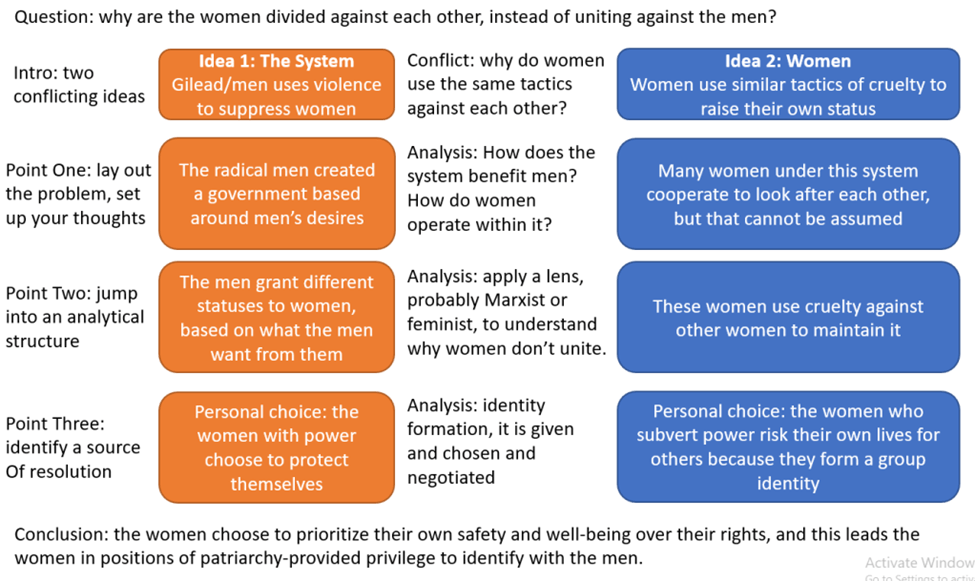
We can make a diagram out this method. On one column, orange, we have the first idea of violent suppression of women by men, for the benefit of men. The corresponding and conflicting idea is that some women use similar tactics against members of their own gender. To bridge this gap we need to acknowledge a conflict. The point of the essay is to resolve the conflict.
In Point One, we lay out the situation. What is the system? What are women’s roles in the system? How do they live and function? Who benefits? In this point, the analysis is linking some form of broader societal happenings to the characters experience.
Point Two is where you want to develop some form of analytical structure. In this case, we can apply apply a feminist or Marxist lens to look at group identity and how people align their identity with a particular group.
Point Three is where you need to combine the first two. We’ll dig into the Marxist system and the concept of gendered identity to realize that each character can choose how they identify within the system, based on what they want. We resolve the conflict by understanding identity formation, which links the societal to the personal.
A lot of students think a concluding paragraph just re-states everything. But it also needs to state the new truth that we realized through the analytical approach.
Here is an empty template that could be used to populate a thesis-generator. ChatGPT won’t give you a thesis-generator this good. Suck it, GPT.
First fill out a question. Then you want to find some overarching conflicting ideas that don’t seem to be able to coexist in the same work. Once you have that, you should use Point One to set the stage and flesh out the conflict. Point Two will be about whatever drives the story: characters, society, weather, the Gods, Nature, fate, etc. These are more thematic elements and often good for an analytical structure.
Point Three is where we hit truth. What does the analytical structure tell us about the conflicting characters? Once you have these things laid out it’s not so hard to make a good thesis.
This looks linear, it never is. Some students fixate on making a good thesis before doing anything else and forget to hone it as they work or make a simplistic thesis. Other students (like me!) get lost in the weeds of setting up analysis and forget to make a good thesis. Just find what works.
Template:
Question:
Thesis:
Supporting Points
Idea 1:
Analysis (bridge the gap)
Idea 2:
Point 1:
Point 2:
Point 3:
Conclusion:
Hey Mr. Crowe, if you see this, I intentionally made my example different enough from the essay prompts that it can’t be copied. I’m just a raging Marxist who likes feminist theory, I went with my interests.
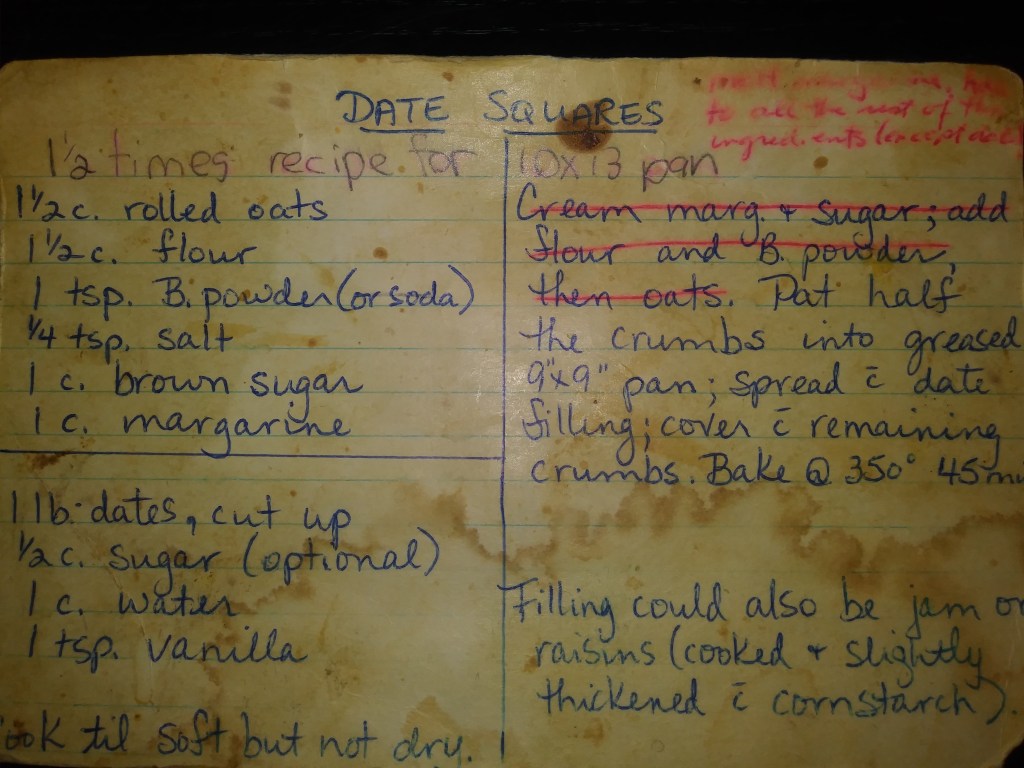
Mix the dry ingredients of the crumbly part together, then melt the butter and mix it in. I do the initial mixing with a spoon then finish off with my hands.
Cut the dates up, into 2-5 pieces per date, depending on size. Try to get somewhat moist but not too moist dates. According to some internet converter, 1 pound of dates is 2.5 cups, so I do 3.75 cups of dates. Or so. I usually go a bit over, but that then means I need more water. Cook them in a pot on the stove at 4 with the water and vanilla until they are goopy and the individual dates have blended into a pasty mush. I suck at this part, so I usually get Mum to help.
Put half the crumbly part into a greased pan, then add the filling, then crumbly sprinkle the second half on top. Pat it down.
Bake in oven at 350 fahrenheit for 45 minutes in 10×13 pan. The recipe was originally for a 9×9 pan, but is adapted. It’s why some measurements look a bit odd.
Most recipes have horribly long life-stories behind them that are sort of but not really related to the recipe. I don’t have much to tell, I don’t have a lot of experiences with dates. Not that I’m willing to share, at least. I mean, no wait. I should stop now.
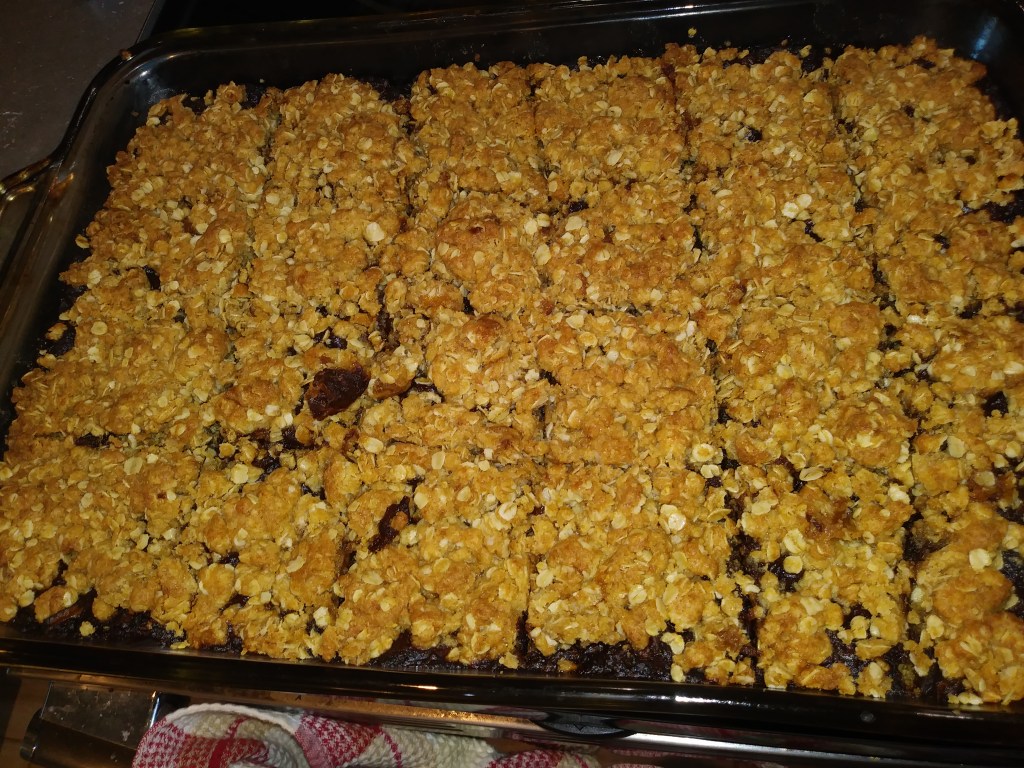
This is more or less what it should look like. Crispy golden top, and the date filling should be darker and thickerened but not crispy.
If you want the squares to taste more authentic, print out the recipe and then accidentally spill stuff on it.
Since the National Day for Truth and Reconciliation is brand-new, and Covid restrictions make large gatherings unlikely, it was understandable that not much happened. Perhaps someday we will have traditions of what to do, where to go, and what to eat on September 30, but for now we need to make up our own commemorations. I considered heading downtown to whatever was happening on Parliament Hill, but that felt too far away. I technically lived in the city of Ottawa from 2001-2020 minus my time on A-lag, but I have never really felt a part of the City of Ottawa. Yes, Parliament Hill is for the whole nation, but I wondered if there was something more local going on. I have plenty of roots in the Kemptville area, so I figured a day about history and remembering should happen in the place that I come from.
So I looked up what was happening in Kemptville, and found nothing other than the sale of Orange Shirts. Then I Gøgled “North Grenville Indigenous History” and pretty quickly found out a few things. There are records of Indigenous peoples living in the area, which is no surprise. But at some undisclosed point they moved on and settlers moved in. That is also no surprise, a lot of histories of Canada involve a convenient moment when the original inhabitants somehow just cease to inhabit the land and disappear from the historical record. People who know a thing or two are aware that there was coercion and deception to get them to vacate the land, and that it was done at a high human cost. Or they could have disappeared because of plague and sickness. Or they disappeared for some unknowable reason. But those facts are often omitted from things like local history websites. So the histories of North Grenville that I found simply state that there were St. Lawrence Iroquoian villages that at some point ceased to exist.
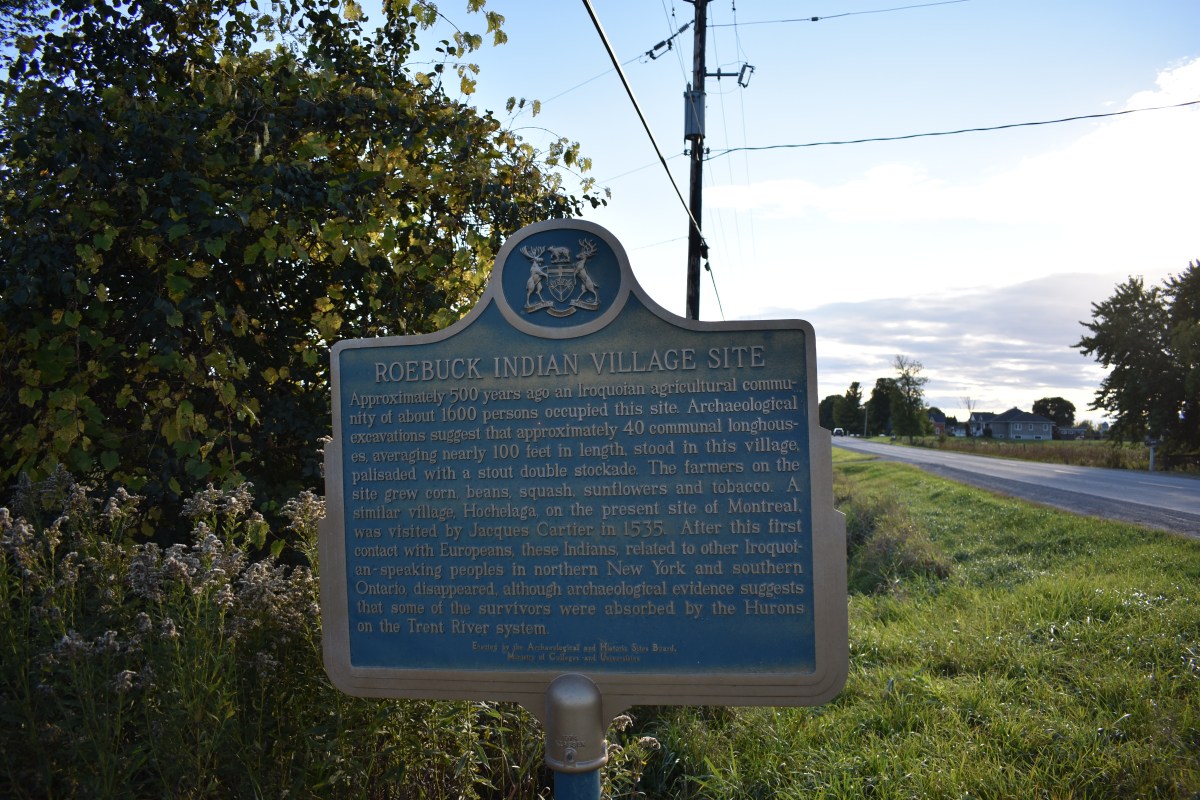
The third interesting thing I found took a bit more online searching. Apparently there are two locations in North Grenville where there were archeological digs at former Iroquoian villages. The villages were sizable, supposedly similar in stature to more well-known ones in Montreal or Ottawa. One of the sites was conveniently near my place (in the country “near” means within a 20-30 minute drive) and there was a plague that marked the site of the dig and the village. So I figured to commemorate the National Day for Truth and Reconciliation I would visit a local Indigenous history site. You know, think national, visit local.
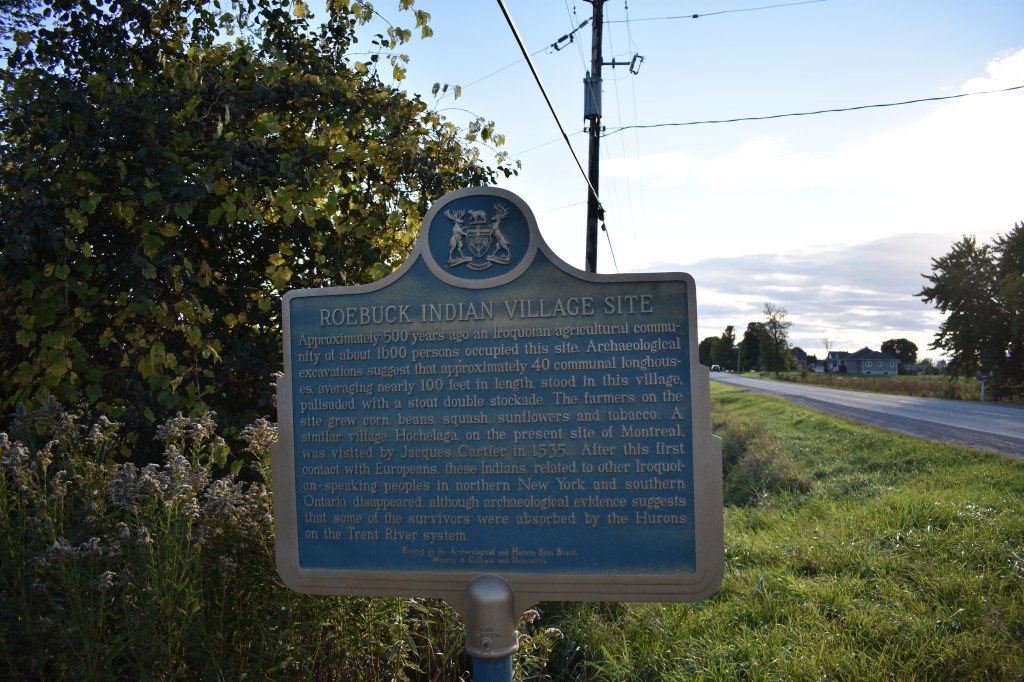
Google Maps did not have a location for the Roebuck Indian Village, but I found a website that said the plague was on County Road 21 about a kilometre east of Roebuck. I actually drove past it the first time, I had to turn around in Roebuck and drive slowly. I found it in-between Jolanda Farms and Pugwash Farm. It was unremarkable. Other than the plague, there is absolutely nothing to distinguish it from any other field entry point or old driveway. I got out of my car and looked around, and I found nothing that indicated that there had been a village or an archeological dig.
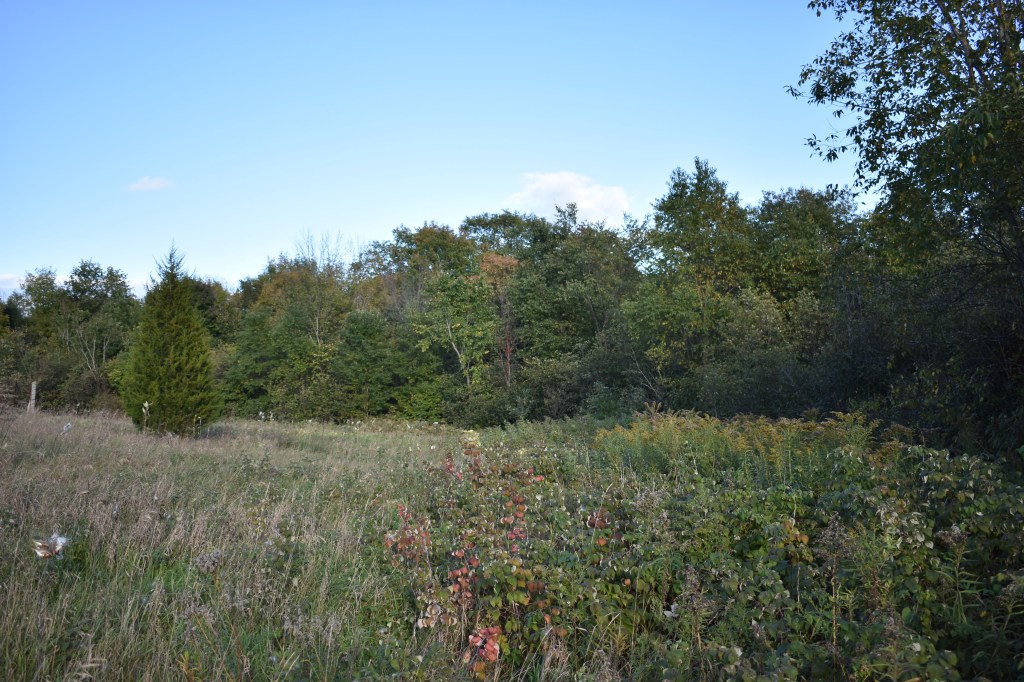
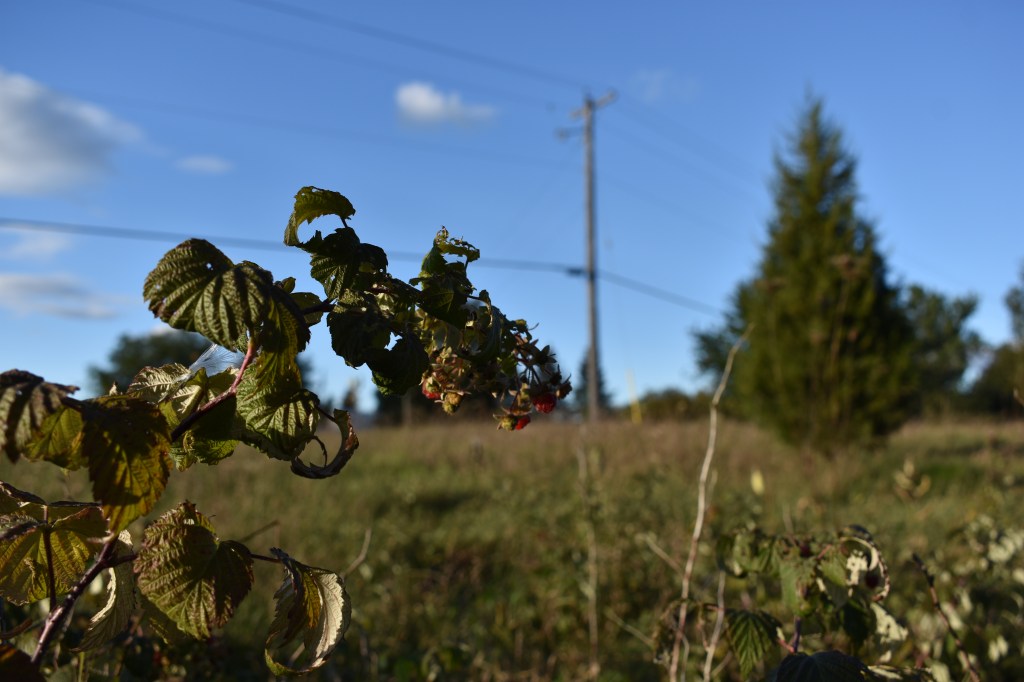
The old driveway appeared to lead past some overgrown bushes to a field, and at first I assumed that the field was the location of the village and the dig. Then I realized that with the age of the site it could be under the trees or the bushes, my mind just gravitated towards “empty space=where stuff happened”. While poking around to see if there was a path to the field I found several paths going from where I parked to an area around some bushes, and I wondered if other people had also recently visited. I followed the paths and found a large clump of raspberries. They were clearly picked over, I had a few of the last remaining ones. So I guess the paths were from foragers, not from fellow history enthusiasts. The raspberries were good.
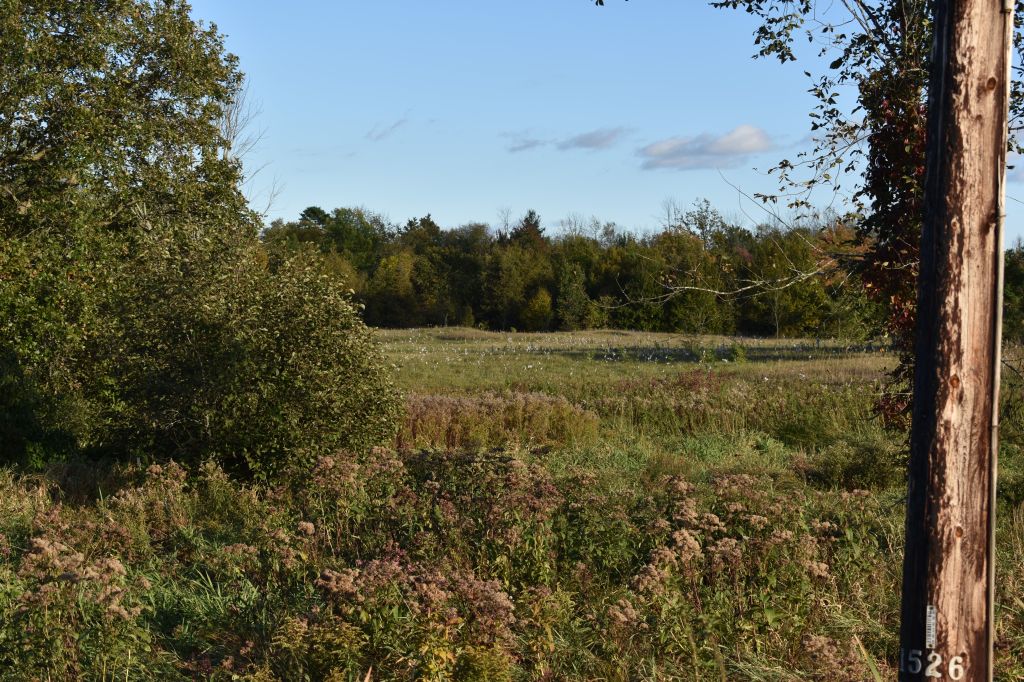
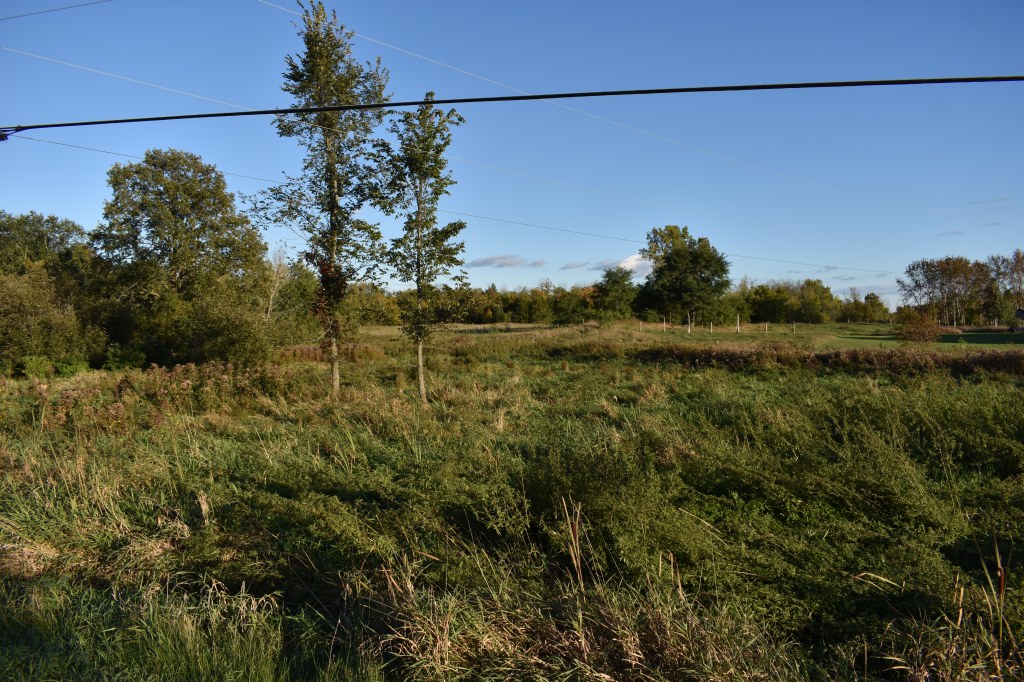
I took a few pictures around the area, but all they show is typical Eastern Ontario scenery. Other than the sign there is no evidence of anything of note.
I’m not exaggerating when I say it is unremarkable. If I ever go back I am bringing some soap and a brush. The patch of raspberries I found. One of the few downsides of my Nikon D3400 is the autofocus feature. It is very hard to get the few autofocus points to line up with small items like raspberries. Good thing manual focus exists. The field behind the bushy area. Look exciting? Does this picture drive home the point that there is nothing interesting to see? Hey look, a field and a fence! How beautiful. I wonder how someone could hold a commemorative event here.
I have now added “Roebuck Indian Village Site” to Google Maps, so if for some reason you want to visit you should have an easier time finding it. I have read many random historical plaques in my lifetime, and this one takes the cake for easiest to miss.
I suspect the absence of anything notable is one of the reasons why it is hard to connect with Indigenous History. Canadian society has a habit of making permanent structures and changes to the landscape that almost always leave remnants. We can use North Gower as an example. The old town hall is still around, even though it is now an archive. The historical blacksmiths and sawmills are gone, but there are businesses in the same location owned by the descendants of the original inhabitants. Even without knowing anything about local history you can walk around uninspiring downtown North Gower and get the sense that people have lived there since the old timey days when houses were built with stone and load-bearing brick. Most people who grow up in English Canada receive a clear mental image of what heritage is. We gravitate towards churches, town halls, courthouses, brick townhouses, old but well-maintained farmhouses, mills of all types, stone buildings, old foundations, etc. But there are, as far as I know, almost no places where you can visually see evidence of Indigenous habitation of Eastern Ontario. The lack of Indigenous buildings, towns, or landscapes marked by habitation make it harder to recognized what happened in prehistory.
I am not saying that absence of cutesie heritage sites means there are no important Indigenous sites in the area. Ottawa is built over Indigenous land, and we can still find hints of that prehistory. The Voyageurs Pathway in Ottawa is a historic travel route that was used to portage around the Chaudière Falls. You could still use it to portage, but for the most part it is now used for cycling and romantic strolls. The entire north side of the Ottawa River in Ottawa contains clear evidence of major Indigenous occupation and of their extensive use of the area. But I suspect most people walking through that area will be enjoying the beautiful views of Parliament, exploring the grounds of the museum, or checking out the construction at Zibi. There are probably few informed folks who look down at the ground beneath their feet and say “hey look! A really old transportation route! And that parking lot is a millennia-old spiritual site and burial ground!”
The absence of visitable sites makes collective memory hard. But the absence of obvious Indigenous history and historical interactions with incoming Europeans is, in my opinionated opinion, one of the biggest issues in Canadian history west of Quebec. In the Maritimes and Quebec there was over two centuries of nation-to-nation relations. A lot of major communities in those provinces are linked to those historical ties. Montreal was first settled as a trade and evangelization outpost. Halifax was founded as part of ongoing wars between England, France, and their North American Indigenous allies. You could think that talking about wars with the First Nations is not a good way to remember Indigenous history, but those wars remind us that the First Nations used to exercise their historic and continuing sovereignty to the full extent. Wars are a normal, if highly undesirable, part of nation-to-nation relationships. I’m not saying we need to start wars, but relationships with sovereign nations tend to get messy without careful and consistent diplomacy. There are not many Indigenous sites in those towns, but you can look around at the built environment and get a sense of the historical interactions. Quebec City and Halifax are clearly built to be defended. That visible historical fact necessitates a discussion of the military history of the area.
But once we go westward from Quebec that history of co-existence, cooperation, and conflict quickly disappears. Instead, settlements exist at points of interest to incoming settlers. There are Indigenous histories in the settled areas, but they are separated and discontinuous with the history of the new nation (Canada) that emerged on that land. It is as if there is a clear line between the time that the First Nations used the land and the time that settlers showed up.
Look at the different settlements west of Quebec. Ottawa is located at a key transportation point, but the city is not there because of long-standing relations with First Nations. It is there because mills need waterpower and the Rideau Canal needed a terminus. Go ahead and try to find a single example of First Nations in the Ottawa area interacting with the City of Bytown or Ottawa. Toronto is at the start of the Toronto Passage, an important overland route from Lake Ontario to Lake Huron that was used by the First Nations and by traders. But once the Toronto Purchase from the Mississauga was made (to obtain land for incoming United Empire Loyalists) those original inhabitants simply disappear from the story. The history of Toronto is told with only scant references to the previous inhabitants, and they disappear as soon as the young town appears.
Many major cities in Western Canada follow this pattern. Edmonton and Calgary exist where there was once a Hudson’s Bay Company outpost. But those outposts, which are a clear indicator of relations with First Nations, did not become major communities until treaties were signed and the railway was built. Distant Churchill, with its long history (Google Prince of Wales Fort, you’ll be amazed something that size was built so far north) could have faded into history if a railway had not been built to it in the hopes of creating a northern port. Even Wikipedia recognizes this, the Churchill article states that between the fur trading years and the creation of the railway Churchill wavered on the edge of obsolescence. I’m serious, go look.
Regina and Brandon exist in their current locations because that is where the railway put a stop. Saskatoon was founded by a temperance movement who wanted to found a dry community. That is a cool story, but it drives home the point that a bunch of European-descent people just wandered out west and found a spot to settle down. Red Deer exists because it is half-way between Edmonton and Calgary. But all of these communities were next to nothing until treaties were signed, the railway was built, and Sir Wilfred flooded the west with the best (and then the rest) of Europe.
Every rule needs an exception, and Winnipeg is the exception to the treaty-railway-settlement pattern. The complex, and ridiculously interesting, history of the real Metis makes me wonder what Canada could have looked like if the developing nation of Canada had managed to co-exist with the First Nations. And the Red River Valley Rebellion is the inspiration for my favourite love song, so maybe I’m partial to the Red River colony.
Again, those who know a thing or two understand that the First Nations did not simply melt away and voluntarily choose out-of-the-way reserves for themselves. There is a history there. But that history is usually overlooked. If you read most histories, the land just becomes empty land. The silent de-peopling of the land creates a convenient narrative device to open up a continent. Whoever was willing to settle there and utilize the land and natural resources in a way that is considered productive could get their little square of free land. I have plenty of childhood memories of people using the terms “free land” or “empty land.” Yes, the land was empty. But it had been emptied. And the land was free, but it was obtained at a high human cost.
I will quickly say a few final points to close out this long ramble. First, I would like to see that sign get swapped out at some point with one that has a better name. “Roebuck Indian Village Site” could become “The Iroquoian Village at Roebuck” or something like that. Secondly, I acknowledge that over the past few years Canada has generally gotten better at acknowledging Indigenous history. But acknowledging a historic presence and a continuing connection to territory is not the same as improving how we portray the past. Many websites still just mention the existence of previous inhabitants and then move on the history (i.e. written records) part of the story. That does not tie the two histories together, even if an acknowledgment is better than nothing.
I believe that the field of Canadian history can get better at incorporating Indigenous history. Something I have noticed, particularly with local history websites, is that many websites have very similar facts and wordings. I think folks are getting carried away with ctrl-c, ctrl-v. We get the same basic facts over and over again, instead of different in-depth stories.
I was a nerdy kid who picked up a lot of information, but back in my childhood next to nothing was said about the previous inhabitants of my home territory. It was not until I read Oka: A Political Crisis and It’s Legacy by Harry Swain that I got enough information about the history of Indigenous peoples in Eastern Ontario to start to piece together a more complex story of where I grew up. And yes, I had to read a book by a deputy minister of Indian Affairs about one of the most traumatic moments in recent Canadian-Indigenous relations to find out about my local history. What does that say about how we access Canadian history? It is too difficult to access solid historical fact and analysis about the Indigenous peoples in Canada, and that needs to be remedied. Truth is a major part of Reconciliation, that is why it is called Truth and Reconciliation. Canada needs to get better at telling Indigenous history.
Since spring 2020, the market for all things outdoors has been crazy, and used canoe prices have probably doubled or tripled. I have also seen a large increase in the total number of boats for sale, so I wonder if people who would have kept their boat in ordinary circumstances are cashing in. In 2021 there have also been many one-year old boats up for sale, so I suspect there are some people regretting their original purpose. The insane demand for boats has also incentivized nut-jobs to go nuts. Since this spring I have seen good quality Kevlar boats get bought and then almost immediately reposted for one or two thousand dollars above the first price. I also saw warning ads posted by a guy who was tracking a particular canoe flipper in Vanier, warning that “buddy” was selling canoes so fast that he wouldn’t be able to guarantee their quality. While I understand that our vigilante was doing what he thought was right with his warning post, I also know it takes about a half-hour to fully inspect a canoe. They are not complicated, nor are they regulated by the government. It is a bit scummy to profit that way, but it is totally legal. Deal with it.
On Saturday, June 5, 2021, I put an 18.5 foot, Kevlar canoe up for sale on Kijiji. I priced it at $2100 because that seemed fair while not so high that I was profiteering off people’s desperation to buy a canoe. By the end of the weekend I had gotten a glimpse into the sketchy, and at times, dangerous underworld of canoe profiteering.
A bit after 9pm on Saturday someone contacted me and offered $100 over asking if he could pick it up that night. I said yes, he was clearly trying to jump the cow. Ha ha, Norsk joke. After I sent him my address he didn’t response. When I was about to go to bed I realized I had a $2100 canoe in backyard and some random guy knew that, plus he had my address. That did not sit well with me. I got out of bed and went outside and moved everything inside, then I locked all the doors. Call me suspicious, but getting someone’s address and then ghosting seemed like a good thief tactic.
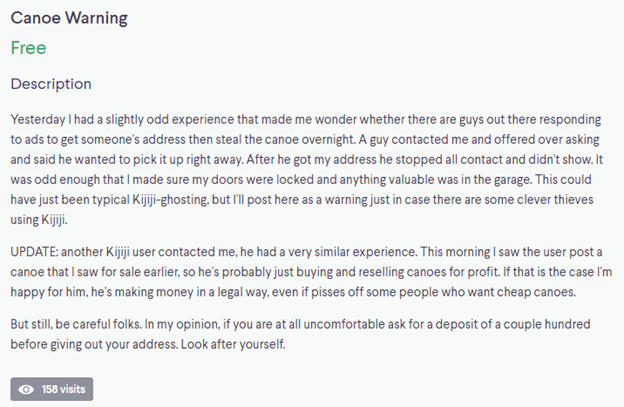
The next morning my canoe was not stolen, and another guy confirmed he was coming. He paid a deposit, so I knew he had skin in the game and was not some sketch artist. But I felt dumb for how I left myself vulnerable, so I posted a warning ad on Kijiji telling people they should seriously consider how they give out their personal info.
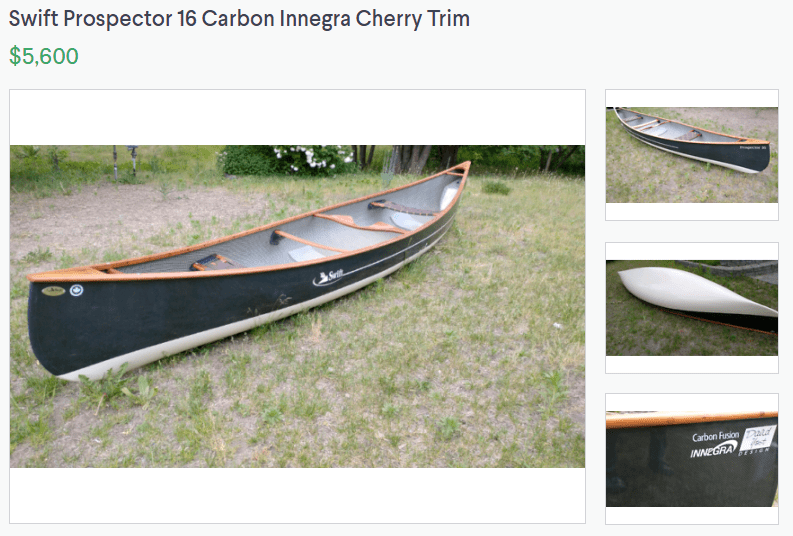
Only five minutes later someone contacted me, and we quickly confirmed that we had both had an almost identical experience with the same Kijiji profile, under the name RC. The other guy at least got a response about why he didn’t come, apparently RC’s house burnt down that night and he was unable to leave. I checked RC’s profile, and that morning he had posted a really nice canoe for $5,500.
Here’s the thing: two days ago I saw that canoe up for sale for $3,500. I am sure that it was the same canoe, when I posted my ad I was happy that the ad right before mine was for $1,400 over, it made my canoe look cheap. The guy who contacted me agreed that it looked like RC was a classic canoe flipper, he may have responded to multiple ads with a bully offer then went for the best one and ignored the others. He could have at least contacted me and backed out, I really don’t mind. Honesty is better than ghosting.
And then the fun began. Another guy contacted me and said he had received threats and been stalked by people who thought he was flipping canoes. Like me, he enjoys buying canoes, fixing them up, using them, and then selling them unless he really likes them. Some people wonder why I have 2-3 canoes at any given moment, I just like it. From what he understands, someone recognized that he had bought a canoe and then later resold at a higher point. Somehow they figured out where he lived, and then followed him when he went to pick up a new canoe. Seriously, this is stalking. Not good, even if you are mad that you can’t get a canoe while someone succeeded. And then they informed him that they have his information and know where he lives. I won’t share all the details because it was a private conversation, but now a guy who likes fixing up canoes is concerned for his family’s safety.
What the flip? Let the guy have his fun. There is something genuinely satisfying about taking an old, beat-up canoe and giving it another twenty years of life. Sanding down old, faded wood and then revitalizing it is like CPR for inanimate objects. Looking at a refurbished canoe and realizing you made it beautiful is guaranteed satisfaction and a good dopamine hit. It’s like My Fair Lady for guys. The ladies don’t find me handsome, so I have to be handy.
Unlike a lot of other people in the canoe market, I don’t care one bit if people flip expensive canoes. Nobody ever died because of a shortage of ultralight canoes. It is legal, they are just buying assets at the low end of the market and then selling at the high end. At the low end of the market (under $600) canoe flipping does price regular people out of the market, but they aren’t guaranteed a canoe either. I put up a canoe for $500 and got twenty responses in two hours. That means that 19/20 people were disappointed. If someone checks Kijiji every hour all summer they may only have a 10% of getting a canoe each time, if they are lucky. Ripping off regular folks who just want a plastic or fiberglass canoe is sort of scummy, but Kevlar canoes are a luxury.
And then later on yet someone else contacted me with their story. They sold a plastic Coleman canoe (the Canadian Tire canoe, which like everything else at that store is cheap and affordable and has a short lifespan) and the next day it was reposted for twice the amount. That slightly cheeses me off. The reposter added no value, and they priced out some family or angler who just needed a cheap boat.
Am I a hypocrite for not liking reposters who flip cheap canoes, while being totally fine with it happening to high-end canoes? Maybe. So instead I’ll say this: we are all part of the problem. Every person who tries to buy a canoe plays the same role in driving up the price. Just like every person on the road has the same responsibility for the traffic jam, you don’t blame the drivers at the front. And I can’t fault who sell their long-held canoes because the market is high, they can cash in whenever they want. I can imagine borderline hoarders who kept their junker around for years “just in case” but now when they realize that it is worth $300 they sell. But yesterday I had an uncomfortable night because I got suspiciously ghosted, and I know at least one other person in Ontario is uncomfortable because of weird behaviour. I never thought having a hobby like canoe repair could be dangerous.
On a side note, that $5,500 canoe was later reduced to $5,400, but is now posted at $5,600. Odd.
Today I unintentionally tested the toughness of my cart. I biked to the beach to have some fun with friends and when I got there I didn’t immediately take the canoe off the wheels. When my friends showed up we went swimming, and a few minutes later some rain started. When we heard the first round of thunder and the rain started to pour we ran to the pavilion, where we managed to stay dry while still staying six feet away from the other beach-goers.
I didn’t see it happen, nor did I get video, but at some point I looked towards my canoe and it was not where it had been parked. It was about twenty feet away and on its side. I ran out in the rain to check on it, and everything looked fine. I gave the wheels a few spins and nothing seemed damaged or unbalanced. Because I didn’t see exactly how much of a beating they took I can’t make to strong of a claim about the quality of Wike’s products, but their heavy-duty cart did survive a wind-born trip. The worst part was that I had left my bag of dry clothes under the canoe to stay dry, so they got damp. I also had my phone under the canoe, I am lucky it was not shattered or waterlogged.
My canoe after the gust of wind.
The rain then stopped and we had a delightful two hours of canoeing and swimming. One thing I had not thought until today was that if I bike to the water I don’t have a car with its heater to warm me up from cold rain, next time I need to bring along a jacket in case of unexpected inclement weather. I also realized that if I don’t like the weather and I want to go home I need to bike home in the rain, with the gusts of wind messing with a lightweight trailer that is hitched to my bike. The cart worked fine on the way home, so I think no damage was done.










 Ian Weatherall