
While I was a TA at Carleton University, I created a model for explaining how to develop a strong thesis statement in historical writing. I got bored over covid lockdown, so I decided to share it with the world. Political science, military studies, economics, and other similar fields often have neat, snappy and simple to explain (if hard to apply) models to help conceptualize the basic tenets of the fields, but history lacks such conciseness. There are many quality books and articles on how to write history, but they are often long and sometimes full of pontificating and excessive verbosity. I love the written word, but sometimes stressed students who value very minute need something in one simple diagram instead of in twenty dense pages.
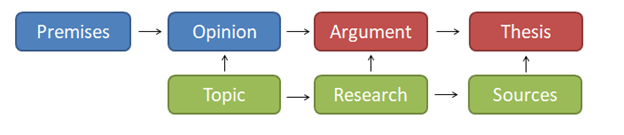
So here is my basic model. The next bunch of posts will be me explaining it, and how to apply it to historical writing. I will point out that this is developed first and foremost for history, but it works fairly well, with minor modifications, for other fields that require you to write more than five pages. Some of my explanations of each component run rather long, but the intent is to have a model that can be grasped and applied in a relatively short amount of time.
Components of a Thesis:
History’s Relation to the Past:

Don’t be fooled by these neat arrows. Each component of both models interacts heavily with every other component in both models, and the two models rely heavily on each other. I tried to join them together into one master model and failed. They are better explained separately, but they need each other to really make sense.
 Ian Weatherall